Value-based pricing for agencies: when it works and when it is fixed price with a story
Value-based pricing sets the fee as a share of what the result is worth to the client, with your cost as the floor. It works when the value is measurable, the buyer owns that number, and you are hard to replace. Most agencies that claim it estimate hours, add a margin and present a fixed price with better language around it.
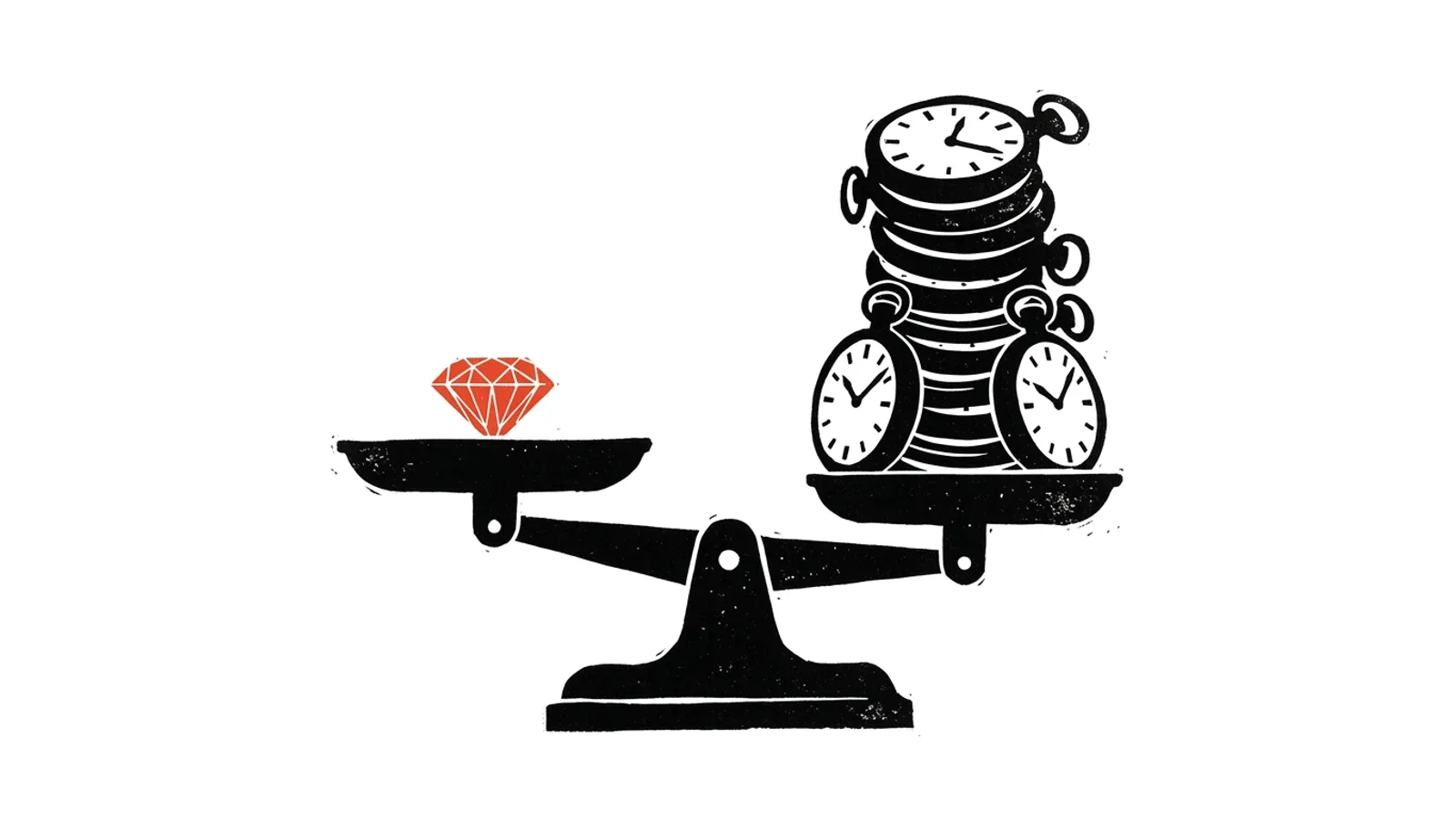
Value-based pricing is the model every agency owner is told to aspire to. Stop selling hours, the advice goes, and charge for the outcome. The margins are better and the client conversations are more interesting.
Both of those things are true when the model fits. My experience is that it fits a minority of agency work, and that most firms saying they price on value are doing something else. This is the honest version: what value pricing is, the conditions it needs, how to run the conversation, and how to recognize when you are really selling a fixed price. It is one of the five models covered in the billing hub.
What value-based pricing means
Every price has a floor and a ceiling. The floor is your cost: the hours the work will take at the rate you need to earn. The ceiling is what the result is worth to the client. No sane buyer pays more than the value they receive, and no sane seller accepts less than cost.
Cost-based pricing starts at the floor and adds a margin. Value-based pricing starts at the ceiling and works down. Same range, opposite anchor.
A worked example. A subscription company loses customers at the payment step. They ask you to rebuild the checkout and billing flow.
| Line | Calculation | Amount |
|---|---|---|
| Your estimate | 300 hours x $150 | $45,000 |
| Fixed price with 20% contingency | $45,000 x 1.20 | $54,000 |
| Client’s current loss at checkout | Their figure, from their own data | $400,000 a year |
| Realistic share recovered | Their estimate, 50% | $200,000 a year |
| Value-based price at 15% of first-year gain | $200,000 x 0.15 | $30,000 |
| Value-based price at 40% of first-year gain | $200,000 x 0.40 | $80,000 |
The cost-based answer is $54,000. The value range runs from $30,000 to $80,000 depending on how much of the gain you can claim. On this project there is room to sell at $75,000, because the client gets their money back in under five months and keeps the gain every year after.
Note what happens if the recovered value were $60,000 a year. A fair share of that is $9,000 to $24,000, which is under your cost. Value pricing then gives a useful answer of a different kind: the project is not worth doing at your cost, and you should say so before either side wastes time. The model cuts both ways. Owners tend to remember only the direction that raises the price.
The three conditions it needs
Value pricing holds up when three things are true at once.
The value is measurable
There has to be a number. Revenue gained, cost removed, hours saved, risk reduced with a price attached. “A more modern brand” and “a better developer experience” may be valuable. They cannot anchor a price, because the client cannot put them in a budget request.
The buyer owns the number
You need to be talking to the person whose results change when the project works: the founder, the head of the business unit, the executive with the P&L. A procurement officer or an IT manager with a fixed budget will compare your quote with two others on a day-rate basis, and no conversation about value changes the form they have to fill in.
You are hard to substitute
This is the condition agencies skip. If three other firms can deliver the same result and will quote it at $150 an hour, the client’s alternative is $54,000, and that alternative sets the ceiling. The value of the outcome becomes irrelevant. Value pricing needs a reason the client believes you in particular will get the result: a track record with the same problem, a method, a narrow specialty, a relationship built over years.
When one condition is missing, the price collapses back toward cost plus margin. That is fine. It means you are in a market for hours or for projects, and you should price accordingly using the comparison in agency pricing models.
The test for whether you are really doing it
Here is how most “value-based” quotes get made. The team estimates the hours. Someone multiplies by the rate and adds a buffer. The proposal presents one number, with a paragraph about business impact above it. The timesheet never goes to the client.
That is a fixed price. There is nothing wrong with it, and I recommend it for well-understood work. It becomes a problem only when the owner believes it is something else and stops pricing the delivery risk properly.
Three questions separate the two.
| Question | Fixed price | Value-based |
|---|---|---|
| Where did the number come from? | Hours x rate, plus contingency | A share of the client’s gain |
| Would the quote change for a client with twice the upside and the same scope? | No | Yes |
| What did you discuss first with the buyer? | Requirements | What the result is worth and how it will be measured |
If your answers are in the middle column, call it what it is and manage it as fixed price. The method for pricing that risk, including a calculator and decision sheet, is in fixed price vs time and materials.
Running the value conversation
The value conversation happens before scope, and it is a set of questions. You are finding out whether a number exists and whether this person owns it.
- What is this problem costing you today, per month or per year?
- How do you know? Where does that figure come from?
- If it is solved, what changes in the numbers you report?
- How would we both know, six months later, that it worked?
- What happens if you do nothing for another year?
- What have you already tried, and what did it cost?
Good buyers enjoy these questions. They show you care about the result. A buyer who answers “I just need a quote” has told you which market you are in. Take the hint and quote a project.
Write the client’s own figures into the proposal, attributed to them. The price is then framed against a number they supplied. You are never in the position of asserting what their business is worth.
Offer three options
A single value-based price invites a yes or no. Three options invite a choice among them. Structure them by outcome and risk.
| Option | What the client gets | Price |
|---|---|---|
| A | Rebuilt checkout flow, delivered and handed over | $55,000 |
| B | Option A, plus payment-failure recovery emails and 90 days of tuning against the conversion target | $75,000 |
| C | Option B, plus a 12-month optimization program with quarterly targets | $75,000 and $6,000 a month |
Option A sits near your cost-based price. It is the floor you are happy to deliver. Option B is the one built around the value. Option C adds ongoing work, which is a retainer under another name and should be documented as one.
Most buyers pick the middle. The few who pick A have still bought a profitable fixed-price project.
Why it fails
You carry all the delivery risk. A value price is a fixed commitment. If the 300 hours become 450, the client’s gain is unchanged and so is your fee. Value pricing raises the ceiling on your margin and leaves the floor exactly where fixed price puts it. You still need a tight statement of work and a change process.
The scope is anchored to an outcome you do not control. You can rebuild the checkout. You cannot make the client’s marketing team send traffic to it. If the fee or a bonus depends on results, define the measure, the baseline, the time window and the client’s obligations in writing. Pure pay-for-performance deals are a bet on the client’s execution, and I avoid them unless I can see their data.
Value fades in the client’s memory. The $200,000 gain feels vivid before the project and ordinary a year later. Renewal conversations drift back to “what are we paying for these hours”. Report against the original number while the engagement runs.
The team keeps thinking in hours. If delivery staff know the project is “worth” 300 hours, they will manage to 300 hours and treat the premium as slack. Keep an internal budget and track time against it. The realized rate on a value-priced project should be well above your standard rate. If it comes in at standard, you took fixed-price risk for hourly reward. The mechanics of measuring that are in the pillar on billable hours.
Where it fits in a real agency
In practice, value pricing is something a mature agency does on a quarter of its work, perhaps less. It suits the engagements where you have deep experience, a senior buyer and a visible number: conversion work, process automation with a labor saving, migrations that retire an expensive system, advisory work for executives. Automation and AI projects often qualify, because the saving in hours or headcount is easy for the client to calculate. I cover that kind of engagement in the AI consulting business.
The rest of the book stays on fixed price, time and materials, and retainers, priced from a cost floor you know precisely. Knowing that floor is what makes a value conversation safe, because you can walk away from any number below it. The calculation is in how to price consulting services.
My advice to an owner who wants to start: pick one upcoming project where all three conditions hold. Ask the value questions before you talk about scope. Build three options. Quote the middle one at a number that makes you slightly uncomfortable. Track the hours anyway. One project priced this way will teach you more about your market position than a year of reading about it.
Common questions
- What is value-based pricing?
- It is setting your fee according to the financial value of the outcome for the client. Your hours and costs set the minimum you will accept. The client's expected gain sets the maximum they will pay. The price sits between the two, and in my own quotes it has landed anywhere from 15% to 40% of the first-year gain.
- How is value-based pricing different from fixed price?
- Both give the client one number. A fixed price is built up from your estimated hours plus contingency. A value-based price is worked down from the client's gain. The test is simple: if the same work for a client with twice the upside would get the same quote, you are doing fixed price.
- Does value-based pricing work for software development?
- Sometimes. It works for projects tied to a clear business number, such as checkout conversion, processing cost or churn. It rarely works for general feature development, maintenance or anything where the client can get comparable quotes on an hourly basis.
- How do I find out what a project is worth to the client?
- Ask before you discuss scope. Ask what the problem costs today, what changes if it is solved, how they would measure it, and what happens if they do nothing. If the buyer cannot answer, they are either the wrong person or the value is not measurable.